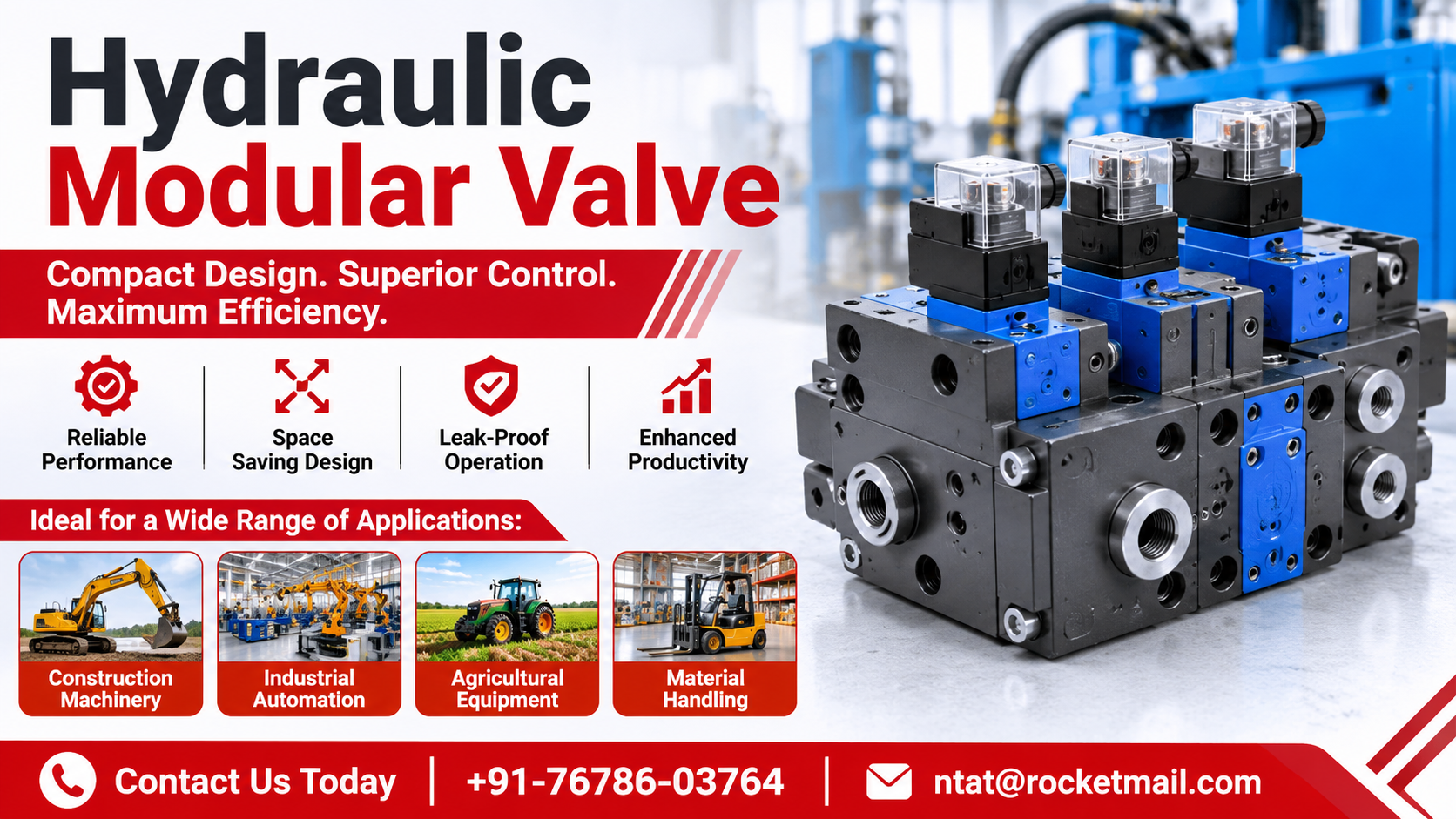
A hydraulic system depends on accurate pressure, flow and directional control to perform consistently. A Hydraulic Modular Valve helps manage these functions through a compact arrangement of stacked valve sections mounted on a common manifold. However, its performance depends on several engineering decisions, not just the valve's size or pressure rating. Circuit configuration, flow capacity, mounting compatibility, response characteristics and fluid cleanliness all influence system operation. Understanding these five design factors helps engineers build efficient hydraulic circuits, reduce avoidable losses and maintain reliable machine performance.
The first consideration is the hydraulic circuit's operating sequence. Modular valves combine different control functions within a single assembly, allowing engineers to create organised hydraulic layouts without installing multiple independent valve connections.
For example, an industrial hydraulic press may require directional control for cylinder movement, pressure regulation to protect the circuit and flow control to manage operating speed. Each valve section must perform its intended function in the correct sequence.
Important design considerations include:
An unsuitable arrangement can cause unnecessary pressure losses, inconsistent movement or complicated maintenance. Engineers should prepare a hydraulic circuit diagram before finalising the valve stack.
Pressure and flow capacity determine whether a modular valve can handle the demands of an application. Selecting an undersized valve may restrict oil movement, increase heat generation and affect machine efficiency.
Engineers should examine both normal operating pressure and maximum pressure conditions. Temporary pressure spikes also need consideration because they can place additional stress on valve bodies, seals and connections.
Flow capacity is equally important. When hydraulic oil passes through restricted internal passages, pressure drop increases. This can result in energy losses and unwanted temperature rise.
Before selecting a valve, evaluate:
For example, a machine operating a large hydraulic cylinder may require higher flow during rapid extension and lower flow during controlled movement. The valve configuration must accommodate these changing requirements within its rated limits.
Modular construction makes hydraulic system installation more compact, but compatibility between individual sections is essential. Incorrect mounting dimensions or port arrangements can create assembly difficulties and increase leakage risks.
Many modular valves use standardised mounting interfaces, including ISO 4401 and CETOP patterns. However, engineers must verify the exact interface size and configuration rather than assuming that similar-looking valves are interchangeable.
Check these details before installation:
Correct mounting reduces unnecessary piping and makes component replacement easier. It also helps maintenance teams access individual sections without redesigning the complete hydraulic circuit.
When evaluating Hydraulic Modular Valve Suppliers, businesses should also check whether the available components match their existing manifold dimensions and operating requirements.
Different modular valves perform different hydraulic control functions. Selecting the correct type is important because valve response, internal leakage and pressure drop influence machine behaviour.
For instance, directional control valves manage actuator movement, pressure relief valves protect the circuit against excessive pressure, and flow control valves regulate fluid delivery.
Engineers should pay attention to four characteristics:
Response time: Determines how quickly a valve reacts to a control signal or operating condition. It is particularly relevant in automated machinery with repeated operating cycles.
Internal leakage: Excessive leakage can affect pressure holding, cylinder positioning and system efficiency.
Pressure drop: Internal restrictions influence the energy required to move hydraulic oil through the valve.
Operating method: Manual and solenoid-operated configurations should match the machine's automation requirements.
For equipment involving repeated cylinder movements, the selected valve must provide suitable control characteristics for the actuator. Reviewing the machine's hydraulic cylinder requirements alongside valve specifications can help engineers achieve better system compatibility.
Hydraulic oil contamination is a common reason for premature wear and unreliable valve operation. Small particles can damage internal surfaces, restrict passages and interfere with precision-fitted components.
Fluid cleanliness should therefore be considered during the initial system design.
Three areas require particular attention:
Operating temperature also affects valve performance. Excessive heat can accelerate oil degradation, influence viscosity and reduce seal life.
Regular inspection of hydraulic oil, filter condition, external connections and leakage helps identify developing problems before they cause significant equipment downtime.
Apart from engineering specifications, businesses should consider component availability and technical support when sourcing hydraulic valves. A Hydraulic Modular Valve Wholesaler may be suitable for bulk component requirements, while a Hydraulic Modular Valve Dealer may help businesses source individual products for maintenance or replacement.
Similarly, companies comparing Hydraulic Modular Valve Manufacturers should evaluate product configurations, mounting compatibility, pressure ratings and technical information before making a decision.
The objective should be to select components that match the actual hydraulic circuit rather than choosing products based only on price or availability.
At N.T. Associates, we provide hydraulic and fluid power solutions for industrial machinery applications. Our product range includes hydraulic modular valves, hydraulic cylinders, pumps, motors and other hydraulic components.
Businesses looking for Hydraulic Modular Valve Manufacturers in India can contact our team to discuss their application requirements and component needs.
Better hydraulic modular valve performance comes from balancing circuit design, pressure capacity, flow requirements, mounting compatibility and maintenance considerations. These five factors help engineers avoid component mismatches and improve hydraulic system operation. Careful evaluation of each design requirement also makes it easier to identify suitable components for different industrial machinery applications.
A Hydraulic Modular Valve is a hydraulic control component assembled in a stackable configuration to regulate fluid direction, pressure or flow within a hydraulic circuit.
The major factors include circuit configuration, operating pressure, flow capacity, mounting compatibility, valve response and hydraulic fluid cleanliness.
Yes. They are used in various industrial hydraulic systems where directional, pressure and flow control functions need to be arranged in a compact configuration.
Check the required operating pressure, maximum flow rate, mounting interface, valve function and pressure drop. Always compare these requirements with the manufacturer's technical specifications.
Buyers should verify product specifications, mounting compatibility, pressure ratings, available configurations and technical information before selecting a supplier.